README: A Bookish History of Computing (Review)
While the study of textbooks has proven fruitful in the study of the history of mathematics, there has been little attention to computing books and their role on the development of computer science, the computer industry, and public understanding. Working to close this gap, W. Patrick McCray has written README, a “book about books about computing.” (pg 3) The scope is “a history of computing writ large as seen through the histories of a limited but well-chosen selection of books […] and their authors, editors, publishers, and readers.” (ibid). McCray selects non-fiction works that influenced the understanding and direction of computing in the latter half of the 20th century.
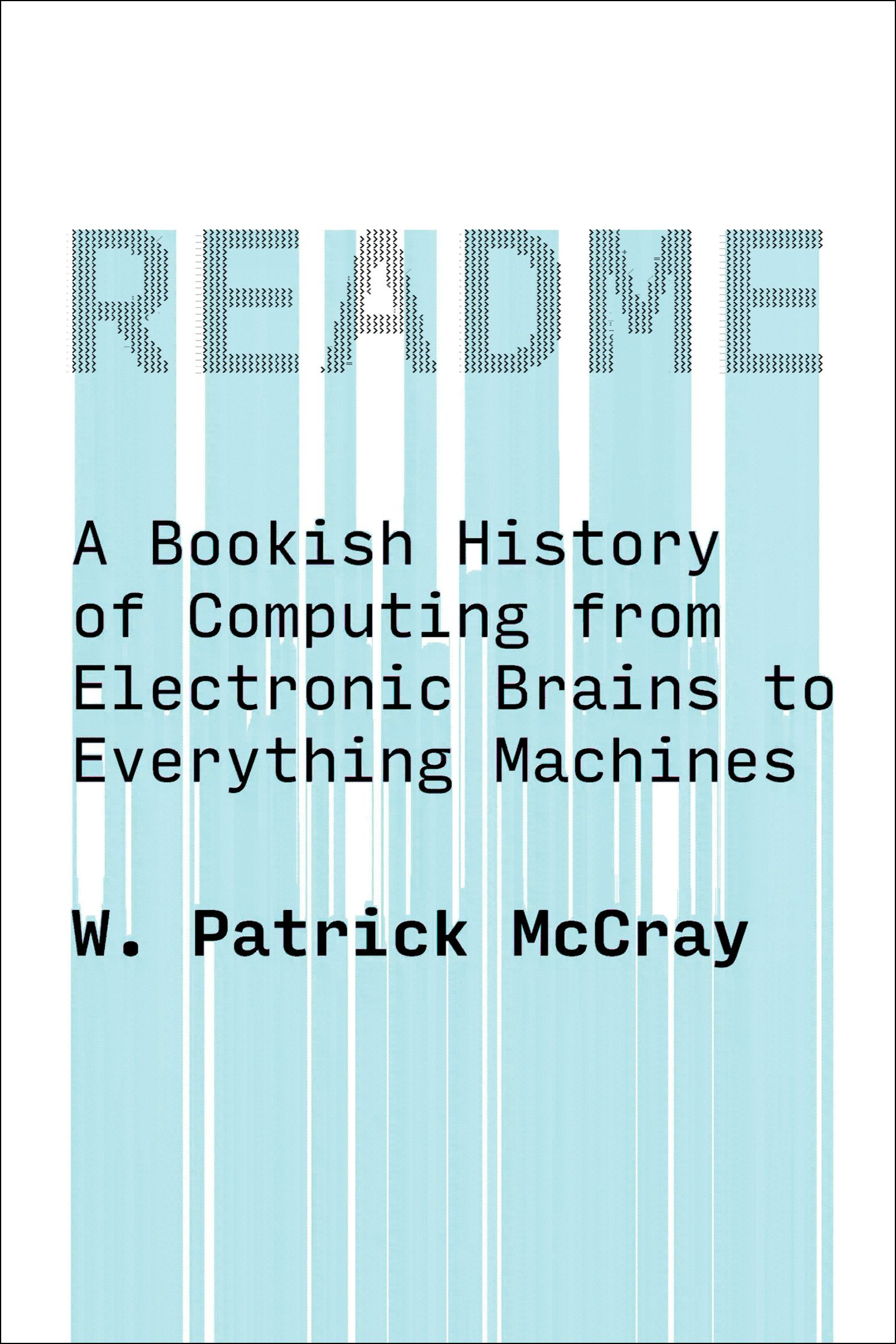
README: A Bookish History of Computing from Electronic Brains to Everything Machines. W. Patrick McCray. The MIT Press. (2025) Publisher Link
Organized largely chronologically, the book begins with Edmund Berkeley’s Giant Brains (1949), an early description of computers for the masses, and ends with Esther Dyson’s Release 2.0 (1997), a volume about the Internet and implications of a digital age. McCray’s analysis has a broad scope and each chapter covers the social context that the authors and publishers worked under and how that influenced their works. Many chapters cover multiple works, particularly the final chapter which expounds on popular public works such as the For Dummies series and the rise of computing magazines. Two chapters focus on more technical works: TeXbook and Introduction to VLSI Systems and their professional impact. Most of the works he describes are more policy or philosophically-oriented, such as Weizenbaum’s (ELIZA) God & Golem, Inc. and Theodor Nelson’s (hypertext) Computer Lib/Dream Machines. Those interested in computers and society-type questions or the debates on the nature of automation and articial intelligence will find the content rich and a source of further reading.
Positively, README places the books into a greater narrative and connects computing into greater social trends. McCray is able to supply much insight into the individual authors and their backgrounds and how that influenced their work. He also avoids retreading familiar business history.
Of his chosen list of books, we are most familiar with the TeXbook and Knuth’s writings on layout and typography. We find it strange that the account does not mention Adobe at all (for either Postscript or Type 1 fonts) and barely mentions Xerox. In our opinion, the impact of TeX and METAFONT should be placed in the broader context of the desktop publishing revolution and its competitors. In general, evaluating the impact of books is difficult, particularly in fields such as engineering which often ignore history. As an example, consider the continuing debate over the impact of Liber Abaci. McCray makes the best case for the impact of Introduction to VLSI Systems, but his is not the last word on which books should be included in the list.
We recommend this book to those interested in computer ethics, the history of practice in computing, and the on-going debate on human labor, automation, the concept of deceit in artificial intelligence, and our relation to machines. The book would be an excellent companion volume to a computers and society course. The book is accessible to non-specialists.
The Computer History Museum interviewed McCray about the book during a live event in January 2026: